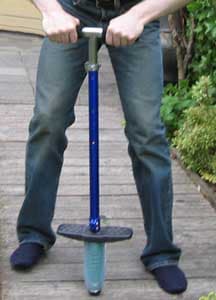
Image: Wikimedia Commons
🔍 Search on Amazon
(paid link) · As an Amazon Associate I earn from qualifying purchases.
◆ Did you have this?
👍 I had this💔 I wanted this1970s · toys
Pogo Stick
A spring-loaded pole that turned the driveway into a bouncing contest — equal parts toy, workout, and inevitable scraped knee.
- Era
- 70s
- Released
- 1919
- Category
- toys
- Availability checked
- 7/16/2026
From the archive
Watch the commercial
▶ Now playing
The pitch
One spring, two feet, and endless bragging rights. Hop on, find your balance, and see how many bounces you can land before gravity wins.
Why people remember it
- Every kid on the block wanted to be the one who could hit the most bounces in a row without falling off.
- It was one of the few toys that doubled as a genuine balance challenge, so mastering it felt like an achievement.
- The spring's distinctive squeaky-boing sound is instantly recognizable to anyone who grew up with one.
Did you know?
- Competitive "extreme pogo" (Xpogo) exists today, with athletes performing backflips on specialized high-performance sticks.
- The classic spring-and-pole design has barely changed since its early-20th-century mass production.
- Pogo sticks saw a major resurgence in backyard popularity throughout the 1970s.
How people search for it
“spring jumping stick toy”, “bouncing pole toy”, “backyard pogo stick”
Tags
Questions people ask
- Who invented the pogo stick?
- Pogo sticks date back to the early 20th century and were popularized in the U.S. after being patented and mass-produced starting in the 1920s.
- Are pogo sticks still made?
- Yes — modern versions range from classic spring models for kids to high-performance foam-core sticks used in extreme pogo sports.